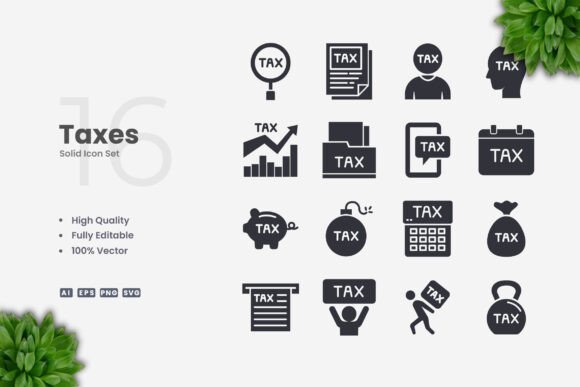
Taxes Solid Icons: A Modern Graphic Design Asset for Content Creators
As a seasoned blog designer and digital publisher, I'm always on the lookout for graphic design assets that elevate content without overwhelming it. When I first encountered Taxes Solid Icons, I was immediately drawn to their clarity and purposeful simplicity. These icons are not just visual elements—they're editorial tools that help guide the reader’s eye and reinforce messaging with clean, bold presence.
First Impressions and Editorial Mood
The first impression of Taxes Solid Icons is one of professionalism and approachability. Their solid, geometric forms suggest a modern aesthetic while maintaining enough softness in line weight to avoid feeling overly rigid or corporate. This balance makes them incredibly versatile across niches—from educational content about personal finance to lifestyle-focused tax tips for small business owners.
I noticed right away that these icons support a clean and contemporary editorial mood. They work well in both minimalistic layouts and more colorful designs, making them suitable for content creators who want to maintain a cohesive brand identity while adapting to different platforms like blogs, newsletters, or social media.
Supported Niches and Visual Tone
- Finance and Accounting: The subject matter aligns perfectly with taxes, budgets, deductions, and financial planning—making this set ideal for bloggers in the money management space.
- Small Business Branding: Whether you're creating infographics or website headers, these icons communicate structure and reliability, which are key traits for building trust in entrepreneurial audiences.
- Content Marketing: With their straightforward design, they can be used to highlight key points in articles, webinars, or downloadable resources without distracting from the message.
Real-World Applications in Publishing Workflows
One of the strengths of Taxes Solid Icons is how easily they integrate into real publishing workflows. Let’s break down where they truly shine in practical use cases:
Blog Featured Images and Website Headers
Incorporating Taxes Solid Icons into your blog's featured images or website headers adds a layer of visual hierarchy that helps readers understand the topic at a glance. For example, using a calculator icon beside a post titled “How to Calculate Your Tax Deductions” gives immediate context and improves click-through potential. Their scalability means they look sharp whether displayed on desktop or mobile devices.
Pinterest Graphics and Social Media Previews
On Pinterest, where visuals drive traffic, these icons make a strong statement. Placed strategically within a grid layout or as part of a larger infographic, they enhance category recognition and help users quickly identify what the pin is about. Similarly, when used in social media previews or article thumbnails, they contribute to a stronger first impression and higher engagement rates.
Newsletter Banners and Digital Guides
For newsletter designers, Taxes Solid Icons are a great way to segment content visually. They can serve as dividers between sections, highlight call-to-action buttons, or accompany lead magnets like checklists or worksheets. In digital guides or eBook covers, they reinforce the theme and give your product a polished, professional finish.
Print Materials and Downloadable Resources
If you’re creating printable tax guides, flyers, or posters, these icons are a welcome addition. Their vector format allows for easy editing in terms of color and size, ensuring they remain crisp even when printed at large dimensions. Plus, they fit seamlessly into Canva templates, saving time when designing for multiple formats.
Boosting Content Performance Through Visual Clarity
Visual communication is critical in today’s fast-paced digital landscape. Taxes Solid Icons contribute to better content performance by enhancing several key areas:
- Stronger First Impression: Clean, solid icons capture attention quickly and signal credibility. Readers are more likely to engage with content that looks organized and trustworthy.
- Clearer Visual Hierarchy: By pairing icons with headlines or subheadings, you can direct focus and prioritize information effectively. This is especially valuable in article headers and editorial layouts.
- Better Click-Through Potential: On platforms like social media or email campaigns, the right icon can increase curiosity and encourage clicks. Think of a briefcase icon next to a title like “Tax Tips for Freelancers”—it speaks volumes before a single word is read.
- More Consistent Branding: Using a consistent set of icons across your website, blog posts, and downloadable products strengthens your brand identity and creates a unified experience for your audience.
- Improved Reader Trust: Professional-looking design elements such as these icons help establish authority, especially when discussing complex topics like taxes.
Where to Use Them Best
These icons perform exceptionally well in specific areas of content publishing. Here are some top-use scenarios:
- Hero Images: Add an icon to emphasize the main topic or offer, helping to anchor the visual storytelling.
- Article Thumbnails: Use a relevant icon to differentiate categories and improve scanning efficiency for returning visitors.
- Pinterest Pins: Pair with high-quality photography or flat illustrations to create engaging, shareable content.
- Editorial Accents: Drop them into sidebars, footers, or call-out boxes to subtly reinforce themes and navigation cues.
- Lead Magnets and Content Upgrades: Icons help break up text-heavy downloads and make steps or features stand out.
- Category Visuals: Incorporate them into blog menus or landing pages to build intuitive navigation and visual interest.
- Newsletter Headers: Use them to introduce new tax seasons, promotions, or educational segments in a fresh, modern way.
Use Cases to Approach Carefully
While Taxes Solid Icons are highly adaptable, there are certain contexts where their bold style may need to be adjusted or avoided altogether:
- Small Mobile Thumbnails: Due to their detailed nature, some icons might lose clarity when shrunk to very small sizes. Always preview how they look in thumbnail form before finalizing a layout.
- Text-Heavy Blog Images: If your design relies heavily on dense text blocks, consider using only one or two icons per image to avoid clutter.
- Low-Contrast Backgrounds: Since these icons are solid, ensure they contrast sufficiently with the background to maintain visibility and readability.
- BUSY LAYOUTS: In already intricate designs, adding too many icons can dilute the message. Less is often more in such cases.
- SERIOUS PROFESSIONAL NICHES: While they lean professional, some legal or corporate sites may prefer a more subdued or abstract visual language.
- CORPORATE CONTENT: Evaluate if the playful yet structured style fits with your company's established brand tone.
- Websites Requiring Extreme Minimalism: If your site uses a very sparse visual system, these icons might feel too dominant unless carefully balanced with negative space.
Publisher Checklist: Practical Notes for Real Projects
Before integrating Taxes Solid Icons into your content publishing projects, here are some actionable tips to ensure optimal results:
- Test on Desktop and Mobile Screens: How they appear on different devices can vary significantly. Make sure they retain their impact across all platforms.
- Check Thumbnail Versions: Preview how the icons render when scaled down, especially for blog cards or social media feeds.
- Preview Inside a Real Blog Layout: See how they interact with fonts, colors, and other design elements in your actual content environment.
- Test with Headline Text: Ensure the icon complements the headline rather than competing with it for attention.
- Check Contrast and Readability: Especially important for accessibility. Avoid placing icons over busy backgrounds without proper spacing or outlines.
- Try in Black and White: Confirm that the icons still convey meaning in grayscale, which is useful for print or monochrome displays.
- Pair with Different Fonts: Experiment with serif, sans-serif, script, handwritten, and display fonts to find the best match for your content style.
- Review File Size for Web Performance: Even though they are scalable vectors, exported raster versions should be optimized for loading speed on websites and apps.
- Compress Images Properly: For static exports, use lossless compression to preserve quality while keeping file sizes manageable.
- Confirm Commercial Licensing: Before using them on monetized sites, affiliate marketing materials, or paid digital products, verify that you have the appropriate commercial license to do so legally.
Why Choose Taxes Solid Icons for Your Next Project?
As someone who frequently sources design assets for clients and my own creative projects, I value versatility, scalability, and editorial relevance. Taxes Solid Icons deliver all three. Their simple but intentional design supports clear communication and enhances the visual appeal of everything from website banners to digital downloadables.
Whether you're working on a digital product like a tax planning worksheet or updating your blog graphics to reflect seasonal changes, these icons provide a reliable foundation. They don’t just look good—they help your content feel more credible, clickable, and coherent.
Final Thoughts on Integrating This Icon Set
Taxes Solid Icons are a standout choice for any content creator looking to refine their editorial design and strengthen their visual identity. Their adaptability across platforms and mediums—from Canva templates to printable design projects—makes them a smart investment for bloggers, digital marketers, and online educators alike.
Just remember to balance their use with your overall design strategy. Let them support your message without overshadowing it. And always keep your audience’s needs in mind—whether you're aiming for a modern, educational vibe or something more lifestyle-oriented.
With the right application, Taxes Solid Icons can transform your content from basic to brilliant, helping you stand out in the crowded world of content marketing and affiliate marketing.